
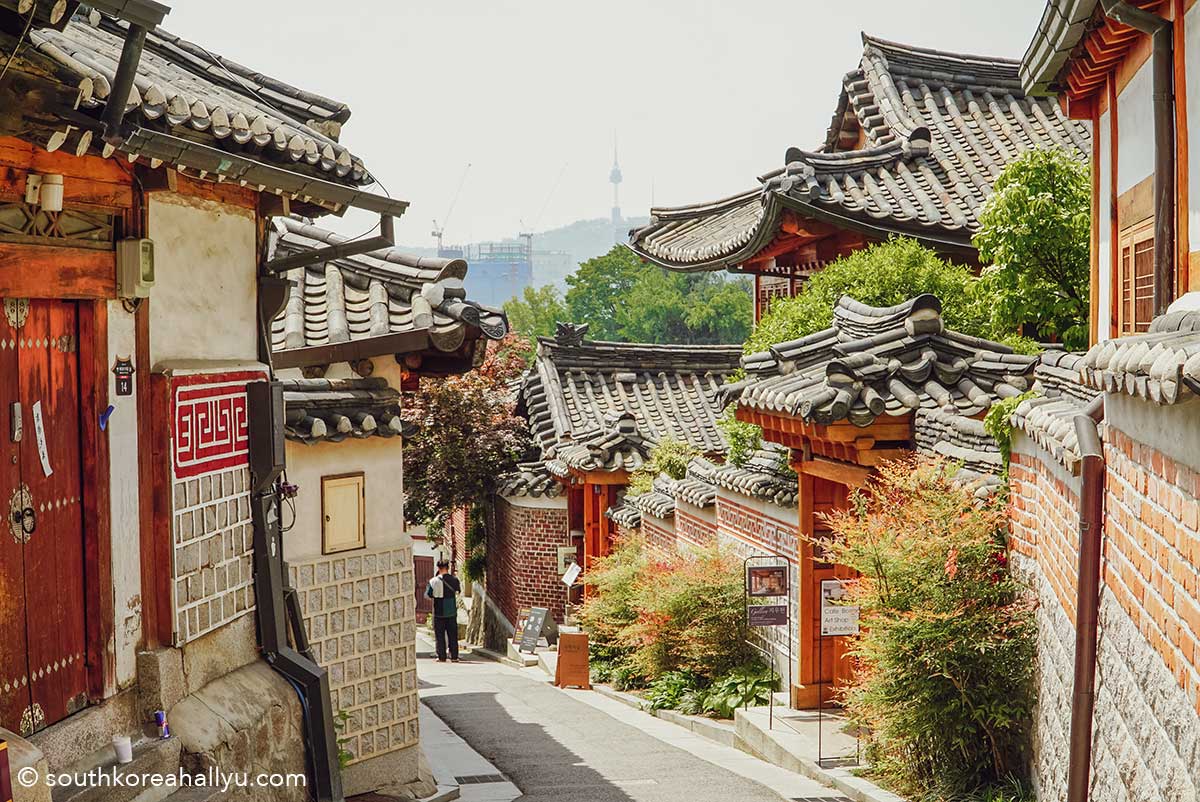
Step Back in Time Among Hundreds of Traditional Korean Houses in the Heart of Modern Seoul
Nestled between two of Seoul’s grandest royal palaces—Gyeongbokgung and Changdeokgung—lies Bukchon Hanok Village (북촌한옥마을). This charming historic neighborhood is famous for its dense cluster of hundreds of traditional Korean wooden houses, known as hanok, dating back to the Joseon Dynasty. With its narrow alleyways, curved tile roofs (giwa), and serene courtyards, Bukchon provides a breathtaking contrast to the towering skyscrapers of modern Seoul surrounding it.
History & Historical Importance
Bukchon, which translates to “Northern Village,” earned its name because it lies north of two major Seoul landmarks: Cheonggyecheon Stream and Jongno. During the Joseon Dynasty (1392–1910), this hilltop area was the premier residential district for high-ranking government officials, nobility (yangban), and members of the royal family due to its close proximity to the royal palaces.
While the neighborhood originally housed grand mansions, the 1920s and 1930s saw a shift in urban planning. Large land plots were subdivided into smaller, modernized hanok to accommodate a growing city population. Despite rapid urban development across South Korea in the late 20th century, Bukchon was carefully preserved through community and government initiatives, saving one of Seoul’s most historic living quarters.
What to See in Bukchon Hanok Village
- Bukchon 8 Views (북촌8경): Eight designated photo spots throughout the village that offer the most picturesque viewpoints of hanok rooftops, alleyways, and the Seoul skyline.
- Bukchon Hanok Hall & Cultural Centers: Restored traditional houses where visitors can learn about traditional Korean architecture, tea ceremonies, and handicrafts.
- Gahoe Museum & Craft Workshops: Intimate venues scattered along the alleys where master artisans showcase traditional Korean embroidery, knotting (maedeup), and calligraphy.
- Baek In-je House: A grand early 20th-century hanok mansion open to the public, showcasing a unique mix of traditional Korean and modern Japanese architectural influences.
- Alleyways of Bukchon-ro 11-gil: The most famous uphill alleyway offering a sweeping view of historic tiled roofs with the modern N Seoul Tower visible in the distance.
The Visitor Experience
Wandering through Bukchon is an immersive, multi-sensory journey. As you walk along the quiet stone alleys, you’ll discover cozy tea houses, artisan craft shops, boutique galleries, and historic cafes hidden behind traditional wooden doors.
Because Bukchon is an actual residential neighborhood where local residents live, visitors are encouraged to practice “silent tourism”—keeping noise levels low, respecting private property, and visiting during designated public hours. Like nearby palace areas, many tourists explore Bukchon wearing traditional Hanok-inspired outfits or rented Hanbok, creating incredible photo opportunities along the historic stone walls.
📍 Virtual Tour: Stroll through the iconic historic alleyways via Google Street View of Bukchon Hanok Village.
Cultural Significance
Bukchon Hanok Village is a preserved living piece of Korean architectural heritage. The design of a traditional hanok reflects the Korean philosophy of harmony with nature, featuring ondol (an ingenious underfloor heating system for cold winters) and daecheong (open wooden-floored halls designed to cool the house during hot summers). Bukchon stands as a powerful testament to how ancient living traditions can coexist harmoniously alongside a modern metropolis.
What Do You Think?
Would you prefer stopping at a traditional tea house in Bukchon or trying your hand at a Korean craft workshop inside a historic hanok?
Leave a comment down below and share your thoughts with our community!