
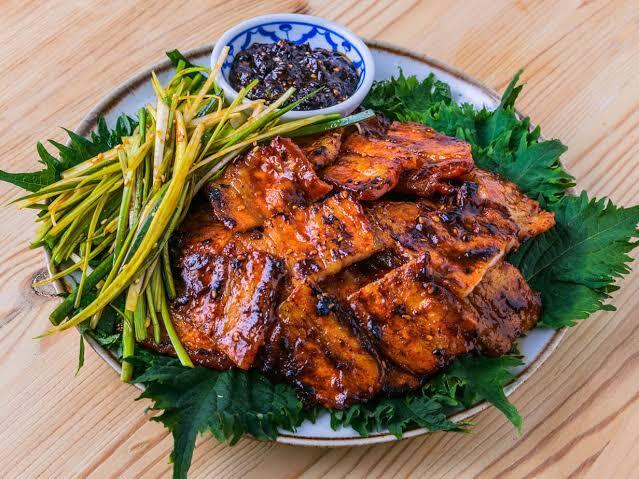
Explore the History of Korea’s Ultimate Grilled Pork Belly and How to Host an Authentic K-BBQ Feast at Home
Samgyeopsal (삼겹살) is the undisputed star of Korean street food and nightlife culture. The name literally translates to “three-layer meat,” referring to the distinct, visible layers of fat and lean meat in fresh, unmarinated pork belly strips. Unlike Bulgogi, which relies heavily on sweet and savory marinades, classic Samgyeopsal is grilled plain right at the table, allowing the high-quality richness of the pork to take center stage alongside vibrant, flavorful dips and fresh wrappings.
While pork has been consumed in Korea for centuries, Samgyeopsal exploded in popularity during the late 1960s and 1970s. Industrial growth led to a surge in demand for affordable, nutrient-dense protein among working-class laborers. Grilled over open flames, paired with garlic, kimchi, and a cold drink, it quickly became the ultimate food for social gatherings and after-work dinners. Today, Samgyeopsal is a global sensation and an essential centerpiece of modern Korean food culture.
Difficulty Rating: 1 / 5
(Minimal prep work and zero marinade required—grilling and wrapping are done directly at the table!)
Ingredients
For the BBQ:
- 1.5 lbs (700g) thick-cut pork belly strips (skinless, about ½-inch thick)
- 1 large yellow onion, sliced into thick rounds
- 1 cup fresh garlic cloves, peeled and sliced
- 1 cup well-aged Napa Cabbage Kimchi
- King oyster mushrooms or button mushrooms (optional)
For the Dipping Sauces:
- Ssamjang (Seasoned Soybean Paste):
- 2 tbsp doenjang (Korean fermented soybean paste)
- 1 tbsp gochujang (Korean chili paste)
- 1 tsp sesame oil
- 1 tsp honey or sugar
- 1 clove garlic, minced
- 1 tsp toasted sesame seeds
- Gireumjang (Sesame Oil Dip):
- 2 tbsp toasted sesame oil
- ½ tsp fine sea salt
- ¼ tsp freshly cracked black pepper
For Wrapping & Serving (Ssam):
- Red leaf lettuce, butter lettuce, or perilla leaves (kkaennip)
- Green onion salad (pajori)
- Sliced green chili peppers (cheongyang)
- Cooked short-grain white rice
Step-by-Step Preparation Method
Step 1: Make the Dipping Sauces
- Ssamjang: In a small bowl, mix together doenjang, gochujang, sesame oil, honey, minced garlic, and sesame seeds until smooth.
- Gireumjang: In a separate small dish, combine sesame oil, fine salt, and black pepper. Stir gently.
Step 2: Set Up the Grill Station
- Heat a tabletop electric grill, cast-iron skillet, or heavy-bottomed pan over medium-high heat.
- Arrange the raw pork belly strips, sliced garlic, onion rings, mushrooms, and aged kimchi near the grill.
Step 3: Grill the Meat and Banchan
- Place the pork belly strips on the hot grill surface. Add the sliced garlic, onions, and kimchi alongside the meat (the rendered pork fat will flavor and fry the kimchi and garlic to perfection).
- Grill the pork belly for 4 to 5 minutes per side until crisp and golden brown.
- Using kitchen shears and tongs, cut the pork strips into bite-sized pieces. Continue cooking for another 1 to 2 minutes until fully crisp and cooked through.
Step 4: Assemble the Perfect Ssam (Wrap)
- Hold a fresh lettuce or perilla leaf flat in your hand.
- Add a small piece of grilled pork belly dipped in gireumjang or ssamjang.
- Top with a slice of grilled garlic, a piece of warm grilled kimchi, and a bit of green onion salad.
- Fold the leaf into a neat bundle and enjoy it in one bite!
Chef’s Tips for Success
- Grill the Kimchi: Always grill your kimchi in the rendered pork fat left on the pan—it cuts through the richness of the meat and concentrated sour-savory flavor!
- Get the Cut Right: Look for skinless, thick-cut pork belly at an Asian market or butcher. Thinly sliced bacon will burn too quickly and lacks the juicy bite needed for authentic Samgyeopsal.
- Master the One-Bite Rule: In Korea, ssam wraps are meant to be eaten whole in a single bite to experience all the textures and contrasting flavors simultaneously.
What Do You Think?
Have you ever experienced an interactive Korean BBQ night at home, and do you prefer your Samgyeopsal dipped in savory Ssamjang or simple sesame oil salt dip?
Tell us about your favorite K-BBQ combos in the comments below! We’d love to read your answers!